
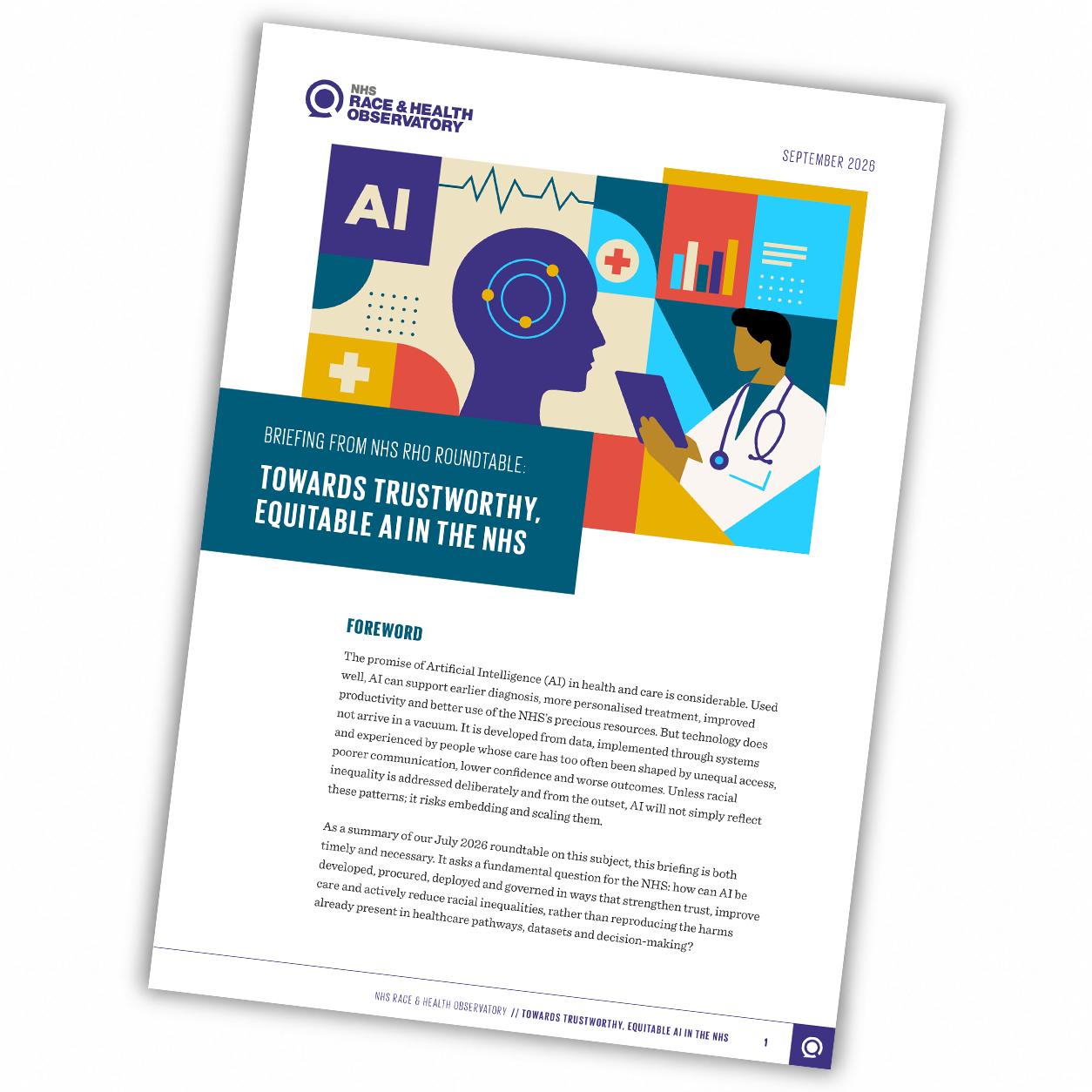
Towards Trustworthy, Equitable AI in the NHS
Artificial intelligence (AI) used across NHS healthcare must embed racial equity to ensure full participation and build further trust with diverse communities and patients.
Analysis and deep-dives from the Observatory team and our network. Here we explore how national policy is impacting racially minoritised patients and communities, and make the case for equitable care.
Artificial intelligence (AI) used across NHS healthcare must embed racial equity to ensure full participation and build further trust with diverse communities and patients.
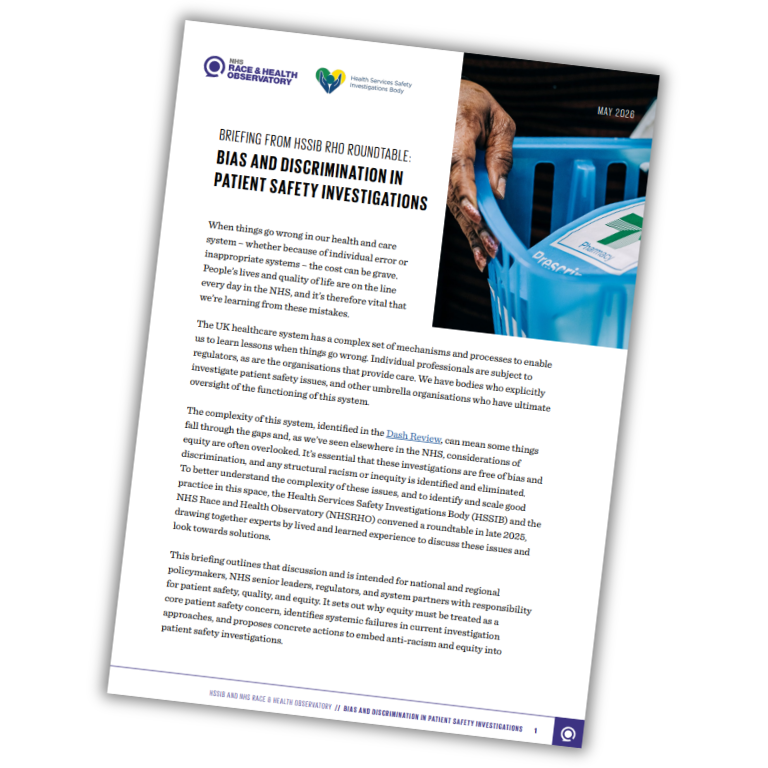
Patient safety investigations are a critical mechanism for learning from harm. However, evidence and lived experience show that racial bias and discrimination are routinely overlooked, leading to inequitable outcomes for racially minoritised patients, families, and the healthcare workforce.

The strategic commissioning framework, if deployed effectively, could move the system towards race equity. But the devil is in the details, writes Sam Rodger, Assistant Director of Policy and Strategy.
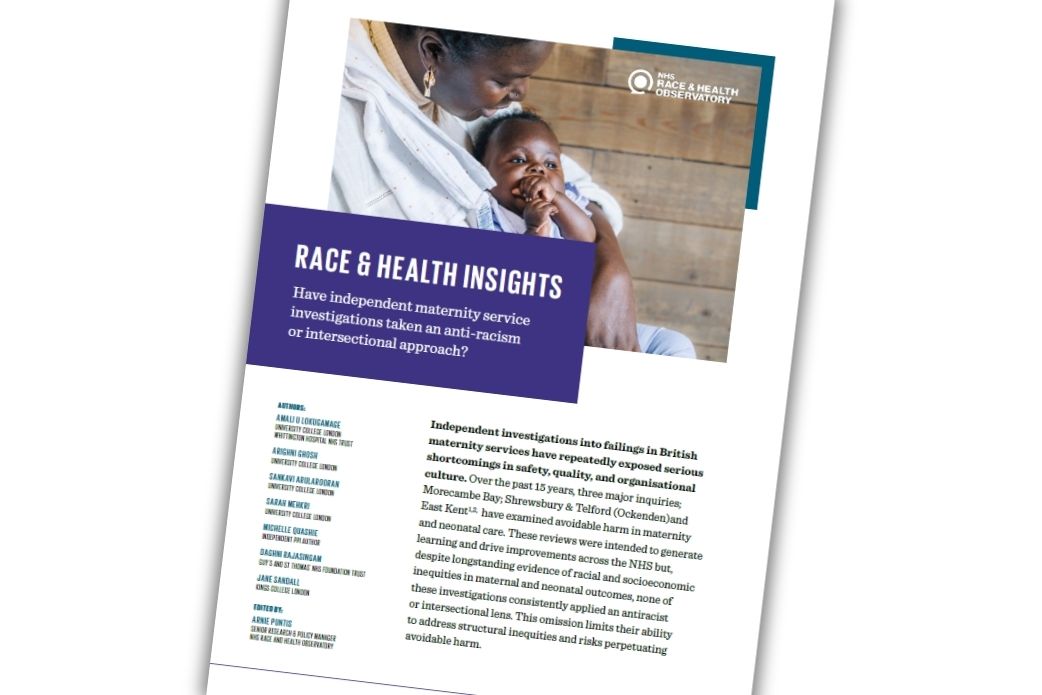
Our analysis examines whether past NHS maternity investigations have confronted systemic inequities or considered the intersection of race and deprivation as drivers of maternal outcomes.
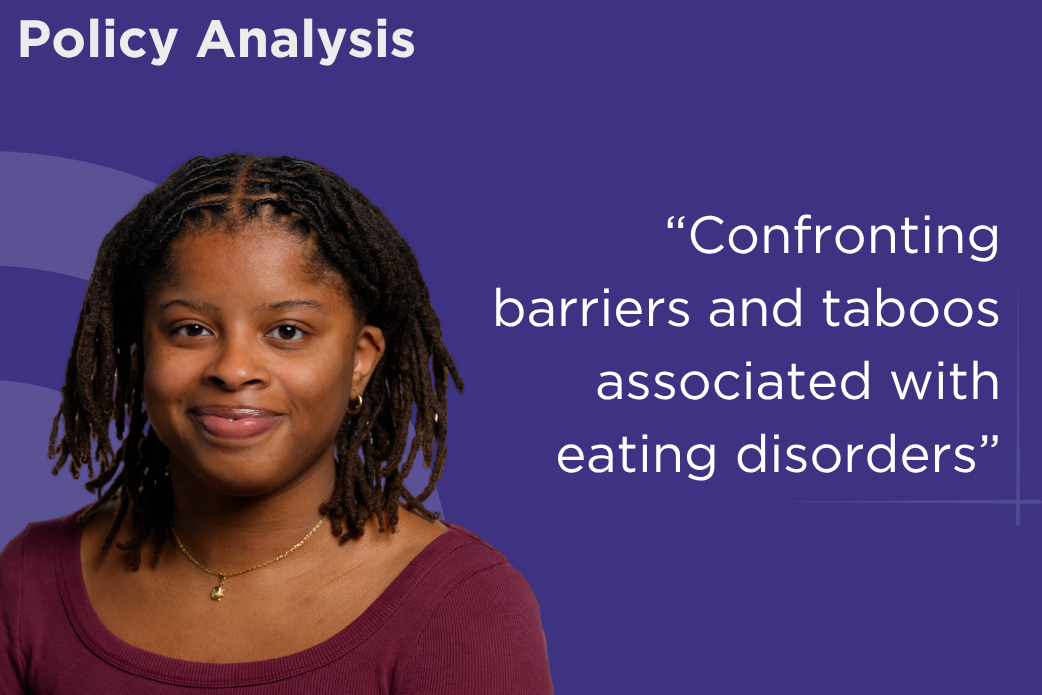
The health system must become culturally sensitive to the needs of racialised people with eating disorders and tackle head on entrenched inequities within services. Leona Letts, our Senior Policy Officer, argues for bold action to transform eating disorder services and break the culture of silence in racialised communities.
The impacts of cervical cancer, and poor gynaecological health are devastating, and disproportionately experienced by ethnic minority women.
Bluntly mandating ‘good practice’ through regulation alone will fail to improve NHS leadership, patient safety, and ethnic health and workforce inequity, writes Rini Jones, Senior Policy and Delivery Manager.
Just as worrying as the findings of the Adult Psychiatric Morbidity Survey are the methodological shortcomings of the survey itself, writes Sam Rodger, Assistant Director of Policy and Strategy at the RHO.
After much anticipation and consultation, our assistant director of policy and strategy Sam Rodger shares initial reflections on the government's plan to “fundamentally rewire” the NHS.
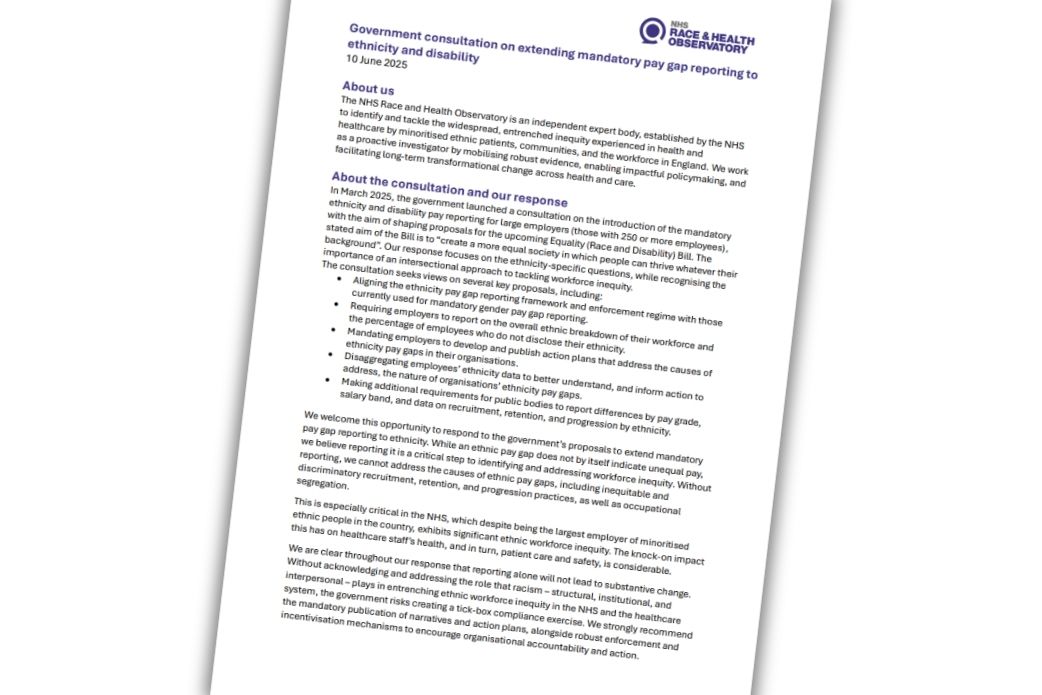
Evidence submitted by the NHS Race and Health Observatory in response to the DHSC consultation on extending mandatory pay gap reporting based on ethnicity and disability.
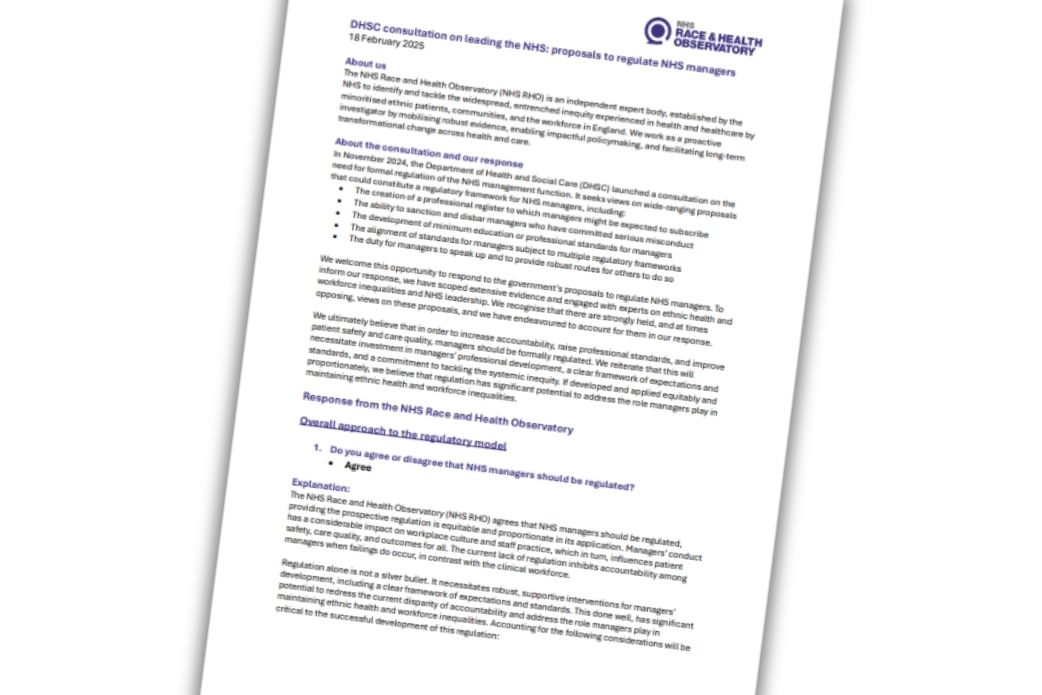
Evidence submitted by the NHS Race and Health Observatory in response to the DHSC consultation on the regulation of NHS managers.
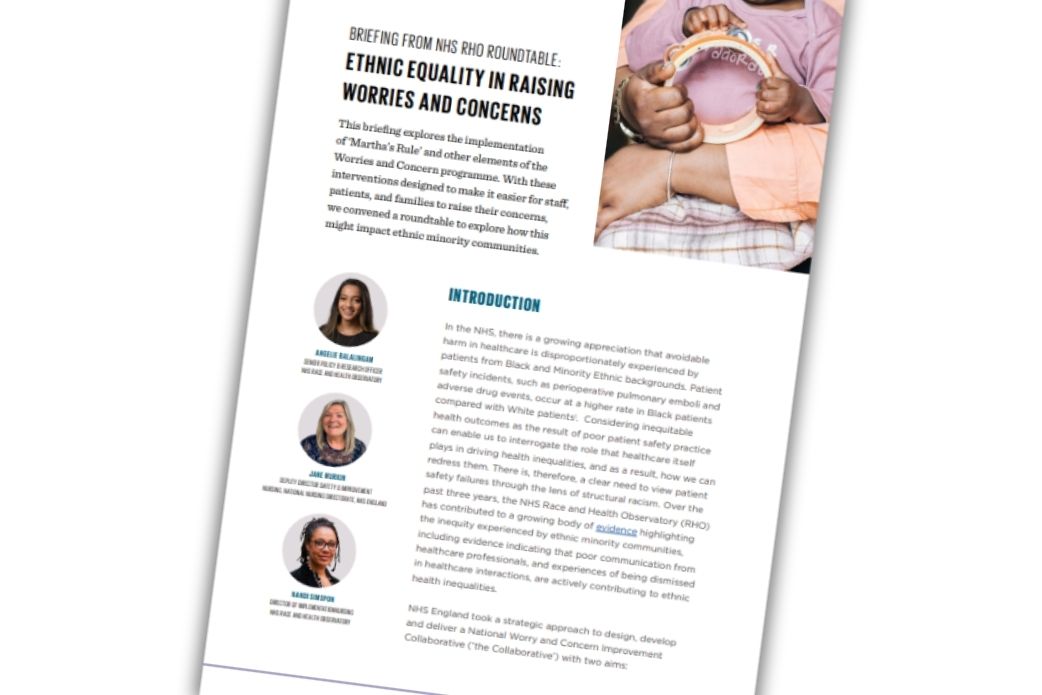
The implementation of ‘Martha’s Rule’ and other elements of NHS England’s Worries and Concern programme were addressed in a roundtable hosted by the NHS Race and Health Observatory in May 2024.
With Professor Ara Darzi soon to report on his review of the NHS, our assistant director of policy and strategy Sam Rodger makes the case that race equity should be a key metric in any analysis of the service’s performance.